
Have you ever looked in the mirror and noticed that your teeth look longer than they used to? Or maybe you’ve felt a sudden twinge of pain when sipping something cold. These could be signs of gum recession, and you’re not alone in wondering what’s going on.
Gum recession happens when the gum tissue surrounding your teeth pulls back or wears away, exposing more of the tooth or even the tooth’s root. It doesn’t happen overnight. It’s usually a slow, gradual process that many people don’t even notice until it becomes noticeable or uncomfortable.
Here’s what you need to know about why it happens and what you can do about it.
Why Do Gums Recede?
There’s rarely a single cause. For most people, it’s a combination of factors that add up over time.
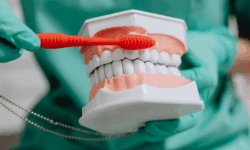
- Brushing too hard: This is one of the most common culprits. Using a hard-bristled toothbrush or scrubbing back and forth with too much pressure can actually wear down your gum tissue. Your gums are delicate, and aggressive brushing pushes them away from your teeth over time.
- Gum disease: Bacterial infections damage the gum tissue and the bone that holds your teeth in place. As the disease progresses, gums can pull away from the teeth, creating pockets that only make the problem worse.
- Genetics: Some people are simply born with thinner or more fragile gum tissue. If your parents had gum recession, you’re more likely to experience it too.
- Grinding or clenching: The pressure from grinding your teeth at night or clenching during stressful moments puts extra force on your gums. That constant pressure can push gum tissue downward.
- Crooked teeth or an uneven bite: When teeth don’t come together properly, the bone and gums around certain teeth can take more wear and tear than they should.
- Piercings: Lip or tongue piercings can rub against your gums and cause them to recede over time.
What Does Gum Recession Feel Like?
At first, you might not feel anything. That’s why it often goes unnoticed. But as the recession worsens, you might notice:
- Sensitivity: Exposed tooth roots are more sensitive to hot, cold, or sweet foods and drinks
- Longer-looking teeth: The tooth appears bigger because more of it is visible
- Notches at the gumline: You might feel a small indentation where the gum meets the tooth
- Loose teeth: In advanced cases, the supporting bone can be affected
Is Gum Recession Serious?
It depends on how far it’s progressed. Early stage recession is mostly a cosmetic concern. But advanced recession can lead to bigger problems.
When gums pull back, they expose the tooth root. Unlike the crown of your tooth, the root has no enamel protection. That makes it vulnerable to decay. And because the gums and bone work together to support your teeth, recession can eventually lead to tooth loss if left untreated.
What Can You Do About It?
The right treatment depends on what caused the recession and how advanced it is.
- At-home changes: If aggressive brushing is the problem, switching to a soft-bristled toothbrush and using gentle, circular motions can stop the recession from getting worse.
- Deep cleaning: If gum disease is the issue, a professional cleaning called scaling and root planing can remove bacteria and smooth the root surface, making it harder for bacteria to cling there.
- Bonding: For small areas of recession, we can apply a tooth-colored resin to cover the exposed root, protecting it and reducing sensitivity.
- Gum grafting: In more advanced cases, Dr. Roppa or Dr. Marshall-Roppa might recommend a gum graft. This involves taking healthy tissue from another part of your mouth (often the roof of your mouth) and attaching it to the receding area. It’s a simple procedure that can make a dramatic difference.
Don’t Wait Until It Hurts
The best time to address gum recession is before you feel pain or notice visible changes. That’s why regular checkups at Smile Viera matter so much. We spot early signs of recession during your routine exam, often before you’ve noticed anything yourself. If you’re already dealing with sensitivity or visible recession, don’t panic. There are solutions. And the sooner we start, the more options we have.
Worried about receding gums? Call Smile Viera today at (321) 614-3833 or request an appointment online. We’ll take a look, answer your questions, and help you protect your smile.